

As noted in our last post, on June 21, 2023 the Massachusetts Department of Environmental Protection released new regulations for siting, upgrading and maintaining septic systems on Cape Cod. In short, the new regulations “require residents and towns on the Cape to reduce the nitrogen in their wastewater. Towns may apply for watershed permits, which if approved, will allow each community to tailor its approach to reducing nitrogen output. If towns do not apply for watershed permits within two years, its residents will be required to upgrade their individual systems to include nitrogen-removing technology within seven years.” [per CLF press release] Three cheers for the DEP, right?
Well, um, no. The revised Title 5 regulations set a new standard for limiting nitrogen output from septic systems – 10 MG/L or less [milligrams per liter.] But the DEP hasn’t approved any nitrogen-removing technology, such as Innovative/Alternative [IA] systems, that actually meets or exceeds the standard! And the agency’s three-step approval process [from Pilot to Provisional Use to General Use] takes close to five years!
The DEP does offer a vague Best Available Technology loophole for homeowners, stating that “if no such alternative system(s) meeting 10 mg/L or less has received general use approval” when a septic permit is filed, “alternative system(s) with the lowest Total Nitrogen effluent performance value certified by the Department for general use can be installed.” [emphasis mine]
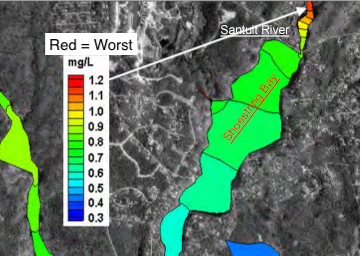
But even this loophole doesn’t help Shoestring Bay and other seriously damaged waterways in the town of Barnstable, whose CWMP has determined that our homes’ wastewater systems must perform to an even higher standard of <5 MG/L Nitrogen (to meet TMDL standards per the UMass Dartmouth Nitrogen Modeling). Well, we can’t wait five years for the DEP to approve a technology that does meet that very low bar! Why? Because Shoestring Bay has already been deemed “highly compromised1,” meaning that ecosystem collapse has already begun.
Our Proposal

- Fast track the DEP’s General Use approval process for high performing nitrogen-reducing systems that have proven success in other states. For example Vegetated Recirculating Gravel Nitrogen-Reducing Systems employed in Oregon and Washington State have been in General Use for 9+ years and have performed well getting to 4 MG/L.
- With more approved technology at their disposal, towns can then issue an immediate moratorium on old-style Title 5 septic systems within 100 yards of any nitrogen sensitive waterway.
- Launch pilot programs to convert Title 5 septic systems at homes on coastal banks to high performing IA systems. Cape Cod State Senator Julian Cyr is a strong proponent of a new tax relief bill that would include funding of up to $18,000 toward the retrofit or conversion of Title 5 systems. Additional opportunities would include potential tax credits for those who don’t qualify for the Senator’s income-qualified funding program.
- Mandate septic and cesspool inspections every three years for all homes within 100 yards of a nitrogen sensitive area with highly contaminated waters, and then flag failing systems. Prioritize conversion of cesspool systems immediately, using grants, tax credits, town funding and low-interest loans, as these are the worst offenders.
- Investigate the issues of septic system over-use in properties by auditing water bills. Higher than allowed flow rates to septic systems and failed systems still remain part of the problem.
Good water quality doesn’t have a price tag on it but it does have a “clock on it.” It’s our responsibility to act now.
USEFUL DOCUMENTS
- Mass DEP Frequently Asked Questions about the new regulations
- Interactive map of designated Nitrogen Sensitive Areas
- Summary of DEP-approved nitrogen-removing technology
- Office of Water 820-F-12-058, Recreational Water Quality Criteria, Health and Ecological Criteria Division, Office of Science and Technology, US EPA ↩︎
 Save Our Shoestring
Pingback: Mass DEP Catch 22: New Septic Regulations, No Effective Way to Implement Them – The Exeter Town Crier