
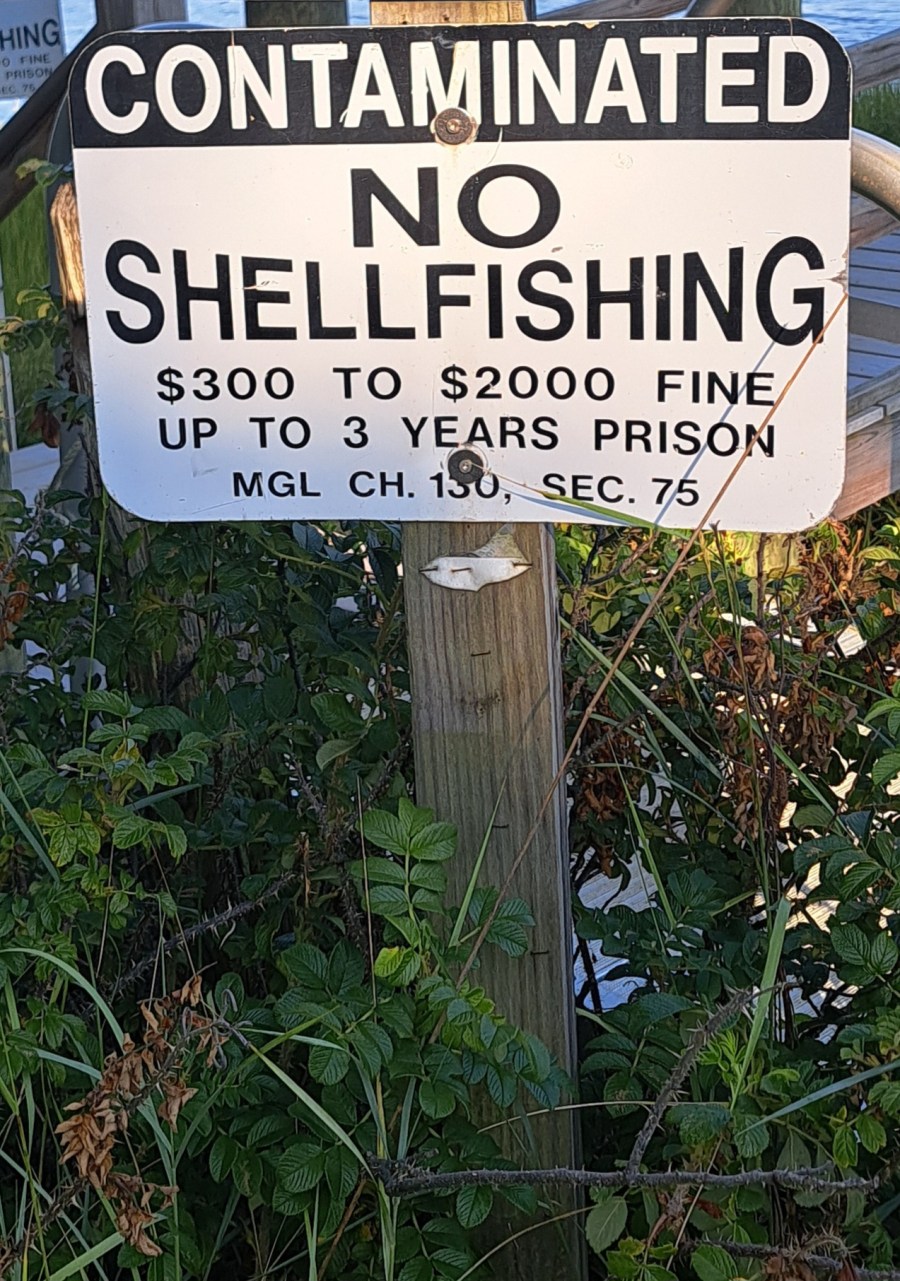
Happy Summer!
We’ve been away for a while and thought it was time for an update on the appalling condition of Shoestring Bay, any progress the towns of Barnstable and Mashpee may have made in addressing the decline, and the status of Mass. Department of Environmental Protection’s [MA-DEP] game-changing 2023 mandate for siting, upgrading, and maintaining septic systems on Cape Cod.
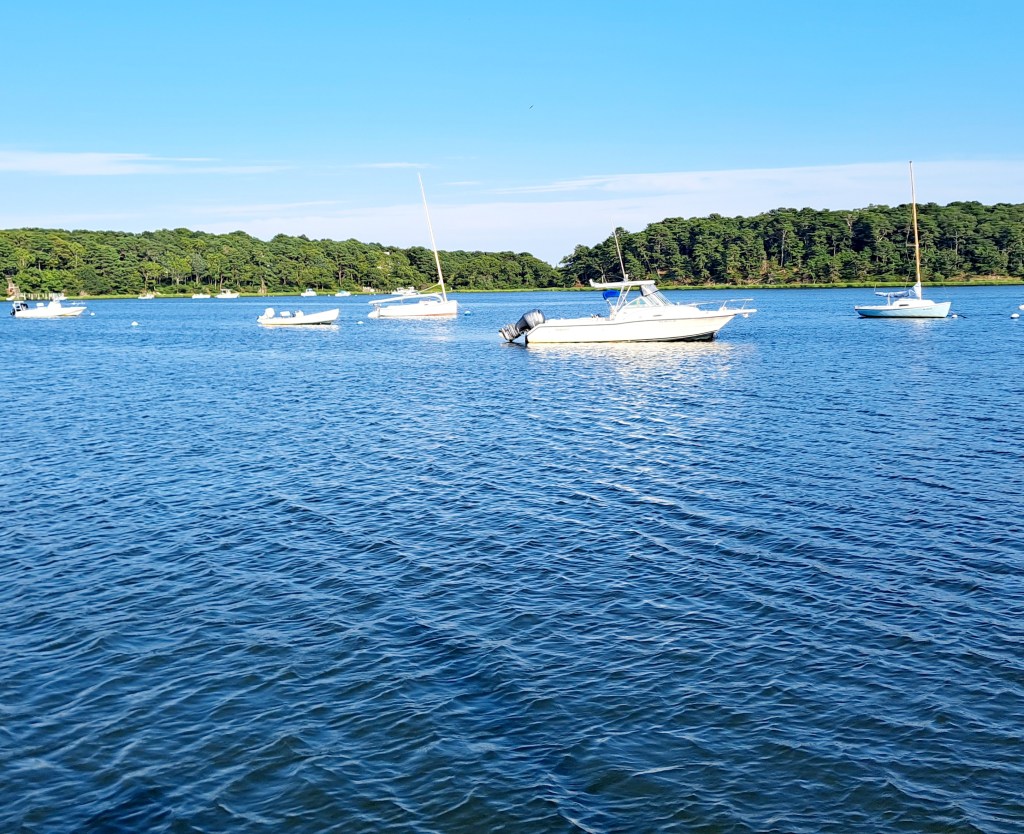
How We Got Here..A Quick Review
Shoestring Bay’s water quality continues to degrade at an alarming rate due to years of neglect, allowing nitrogen-laden effluent to seep out of our septic system leaching fields, into the groundwater, and then into the bay. The Cape-wide problem has been escalating for decades and, in 2019, the Town of Barnstable released its Comprehensive Wastewater Management Plan (CWMP), a 25-year plan that commits the town to install sewering infrastructure as the primary cure for septic wastewater run-off.
The day it was released, we eagerly combed the CWMP to see when Shoestring Bay, deemed one of the most polluted in Massachusetts, would get its “fix.” We were shocked to learn that the town hadn’t prioritized the most endangered and impaired embayments for immediate remedy. Shoestring Bay was stuck at the end of the line…placed in the Nitrogen Sensitive Areas 20-25 year time frame for solving the nitrogen problem. If Shoestring Bay remains such a low priority for the Town, there won’t be a Bay to “fix” in 25 years…because it will likely be dead in five.
Shoestring Bay’s Staggering Decline: a Visual and Data-Driven Inspection
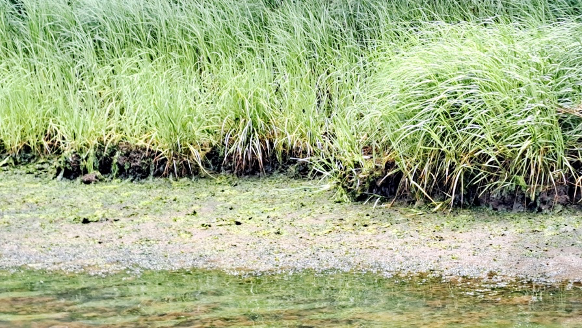
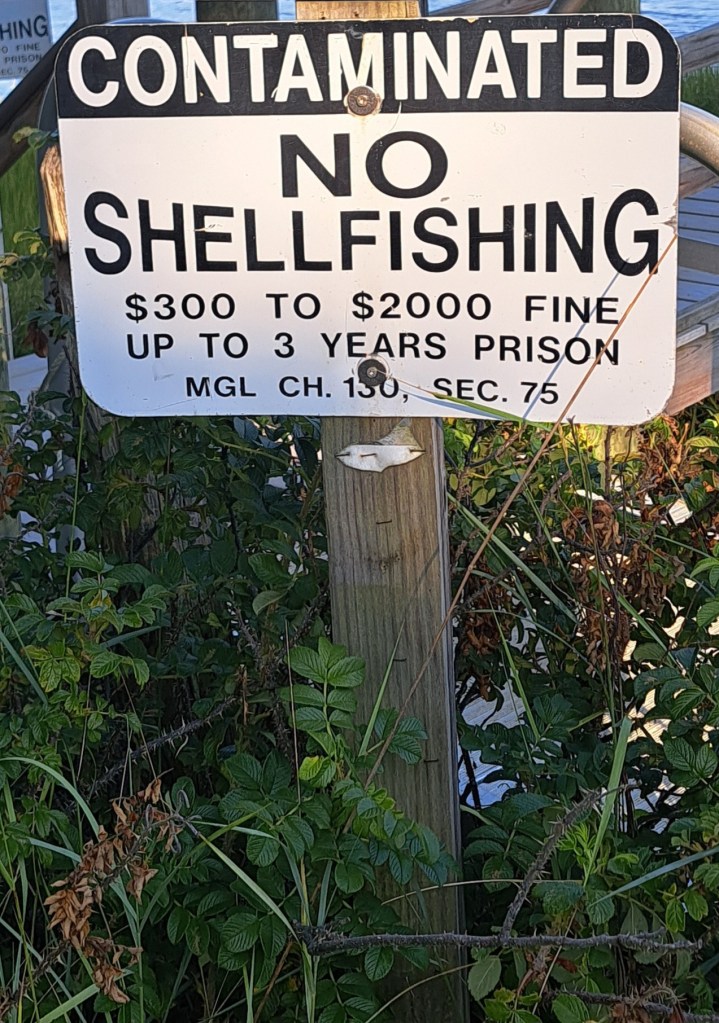
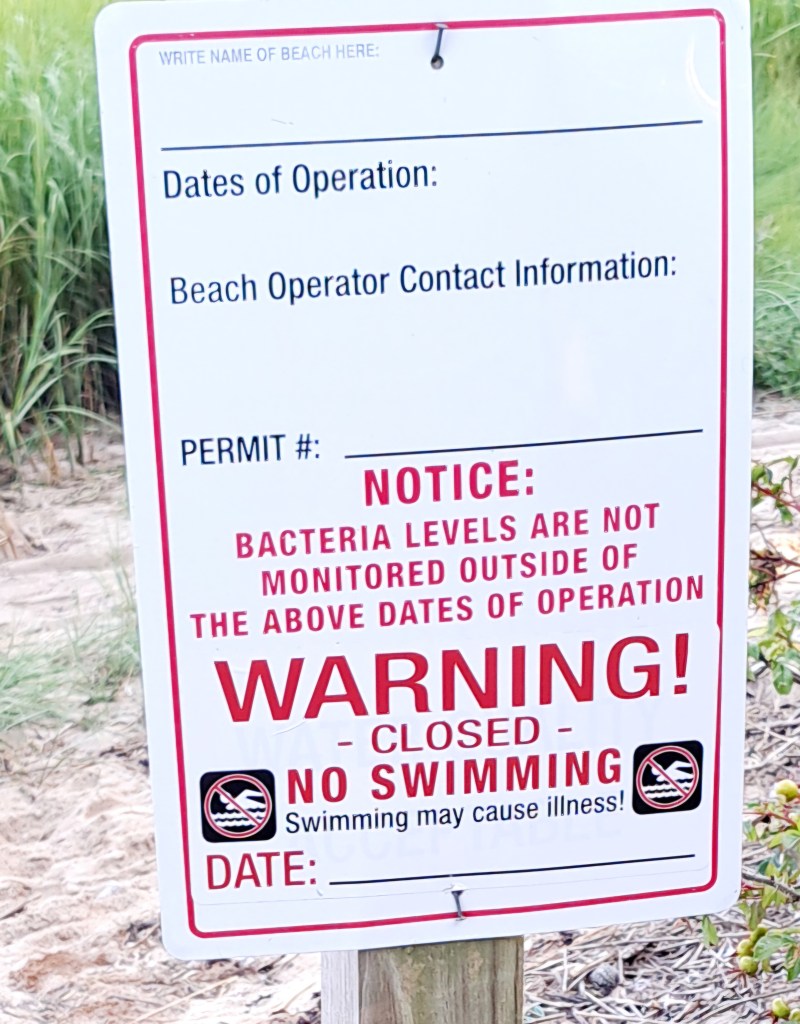
Today, Shoestring Bay’s water is usually a translucent brown, filled with the silt of dying/decomposing algae plumes. The depth of Shoestring Bay has become an issue for navigation, as the bottom is covered in a thick layer (at least three feet in some areas) of black ooze/‘custard’. The ooze is a byproduct of rotting algae that’s eaten by bacteria in an aerobic cycle at the benthic level (lowest of the water column,) leaving behind a toxic mix of near-zero dissolved oxygen and bacteria. Without dissolved oxygen there’s no shellfish. Left unmitigated, we’ll see fish kills and a massive decline in real estate values. Top: Just two years ago the shoreline was lined with mussels within the mud-flats; this year, there are none. Above: “No Fishing” and “No Swimming” signs at the Pirate’s Cove landing entry to Shoestring Bay in August ’24
The Numbers Don’t Lie
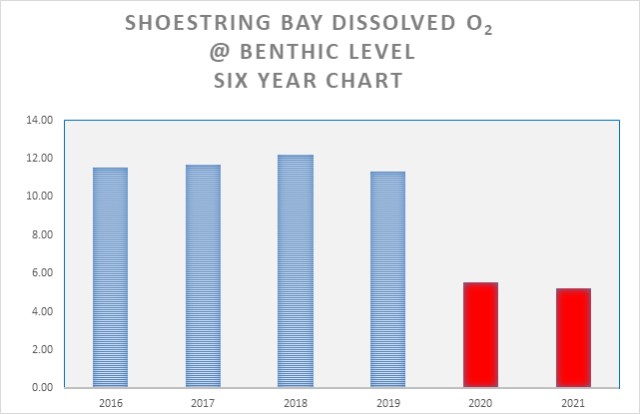
The data below (collected and shared with Save Our Shoestring by the Mashpee Department of Natural Resources) confirms our assessment that the massive amounts of Nitrogen runoff from our septic systems into the groundwater system is sending the health of our bay off the proverbial cliff.

Town of Mashpee Department of Natural Resources Data.
Note the seismic drop-off in dissolved oxygen starting in 2020, which is shown clearly in the the bar chart below.
Dissolved Oxygen Impacts
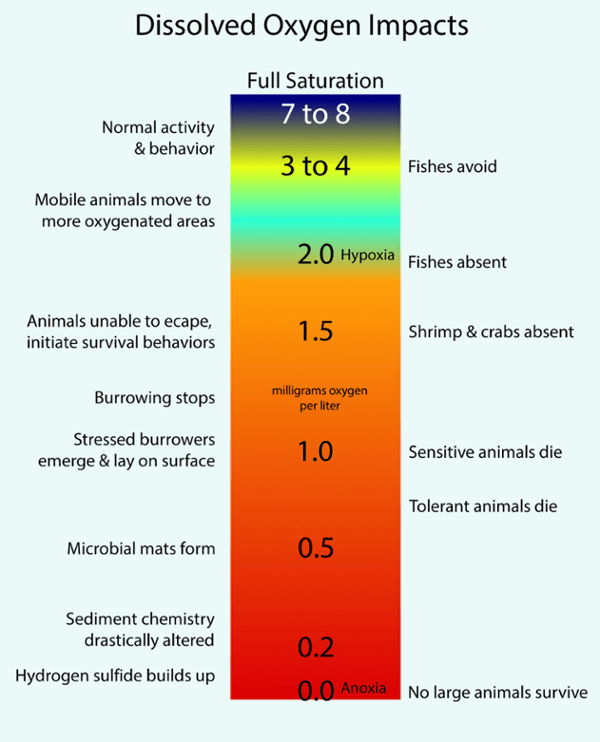
A chart from the highly respected Virginia Institute of Marine Science better illustrates the impact of dwindling levels of dissolved oxygen on the health of an estuarial body of water.
The observed absence of marine life at the benthic level corresponds well with the data provided by the Town of Mashpee Department of Natural Resources.
If you’re wondering what stage Shoestring Bay is at, we’re past the point of forming “microbial mats” where no marine life can survive. The smell at low tide is unmistakably Hydrogen Sulfide, a known carcinogen for fish.
A Ray of Good News – Mass DEP Regulations
In July 2023, the MA Dept. of Environmental Protection issued and started enforcing stricter limits on septic systems for both replacement and new installations done with the MA-DEP’s defined Nitrogen Sensitive Areas. Most of Cape Cod falls within this category, so you’re not going to get off the hook unless your home is serviced by municipal sewering infrastructure. And, no, there are no grandfathering scenarios!
The new regulations for Title 5 systems state that septic systems must reach a consistent level of performance that limits the amount of Nitrogen content (as continuously measured, monitored and reported) within the system’s effluent to no more than 10 milligrams of Nitrogen per liter of discharge effluent. Compare that with the typical Title 5 septic system discharge, which measures anywhere from 45 to 95 milligrams of Nitrogen per liter. In other words, the new regulation states that you will need a 90+ percent reduction in Nitrogen content to comply with the new mandates.
Timetable for Cape Towns to Meet Lower Nitrogen Emissions
Of course, because it’s the government, the new Plan has a very long runway– up to a 20-year timeline for towns to comply…just like Barnstable’s CWMP!! But we’re thrilled MA-DEP finally acted and that towns are now compelled to act.
Compliance Schedule
- Cape towns must file a “Watershed Permit Plan” (WPP) with MA-DEP by 2028
- If the WPP is accepted, it provides a 20-year timeline to comply with the MA-DEP 10-milligrams requirement
- If the Town fails to file for a WPP, it will have up to 5 years to convert or mandate the conversion of all homes/businesses within the Nitrogen Sensitive Zones to wastewater systems meeting the 10-milligrams requirement. This can be done using high performing Innovative Alternative Septic System (IA) or through new sewering infrastructure that complies with MA-DEP and Dept. of Health regulations/permitting processes.
What’s the Cost?
The cost in all cases is borne by the property owners. Some towns will allow on-bill financing, and Barnstable County [the entire Cape] will offer low-interest loans. The cost for cleaning up this mess are pretty hefty: sewering hookups can run $15-$20K per residence and IA septic systems approved by MA-DEP can cost anywhere from $40 – $60K. Yes, that’s brutal. But the alternative? Fish kills, dwindling populations of fish and shellfish, falling property valuations, and a dying tourism industry. In other words, there’s no real alternative to cleaning up our waterways. For more information on the new MA-DEP regulations follow this link: (https://www.mass.gov/regulations/310-CMR-15000-septic-systems-title-5).
Save Our Shoestring in Action
Shoestring Bay is “shared” by the towns of Barnstable and Mashpee, with Mashpee carrying 75% of the pollution load. With the Town of Barnstable ignoring our plight, Save Our Shostring met with Mashpee officials to ask for their help. Mashpee’s sewering infrastructure is less than one mile away from Cotuit and could be leveraged to extend sewering to our side of the Bay and beyond. Imagine if sewering was available to Cotuit embayments within five to seven years instead of 20!
Our meetings with town personnel on both sides of the Bay were quite productive and resulted in inter-municipal discussions that may soon bear fruit. But the clock is ticking on this opportunity. If progress stalls, we’ll be alerting the MA-DEP, EPA, and the State House and keep you posted on any updates.
It’s time for YOU to Act
The Town of Barnstable’s 25-year plan for installing sewering infrastructure is based on a skewed proforma that counts bedrooms instead of bathrooms to determine actual effluent; relies heavily on revenue projections that cannot account for the massively inflated future costs; and ignores the peril of its most endangered embayments. By contrast, the Town of Mashpee prioritized Shoestring Bay and has already triaged its sewering infrastructure to hit the worst cases first.
We’ve been shouting about this for years. Now we need all the loud voices we can get to express their outrage at the decline of Shoestring Bay. We need the help of the MA-DEP, the EPA, and other regulatory agencies to force the Town of Barnstable to re-consider its CWMP timetable and take immediate action to save Shoestring Bay and other dangerously compromised waterways.
Who to Contact
- Shoestring Bay is a navigable waterway that’s quickly closing down. Contact the US Army Corps of Engineers to complain about the dwindling depth of the water within the bay due to nitrogen pollution: Tel: 808 835-4303; Report Violations: https://www.poh.usace.army.mil/Portals/10/POH Permit Violation_1.pdf
- Contact MA-DEP, the US EPA, and the Town of Barnstable to register your dissatisfaction with the quality of water, the rate of impairment, and the need to move Shoestring Bay to the top—not the bottom—of the sewering fix.
- MA-DEP: 888-846-5283; Email Environmental Strike Force; Environmental Complaint Form
- US Environmental Protection Agency: 800-424-8802; Report Environmental Violations
- Town of Barnstable Health Department: 508-862-4644; Email Thomas McKean
- Town of Barnstable Conservation Commission: 508-862-4093; Email Darcy Karle
- Town of Barnstable Department of Natural Resources: 508-790-6272; Email Amy Croteau
Enjoy the remainder of the summer! And please contact any of the organizations above to give Shoestring Bay a fighting chance.
Gary Markowitz/Save Our Shoestring
 Save Our Shoestring